


Solar Brings Long-Awaited Water to Ethiopian Farmers
The rich red soils of Ethiopia’s Berbere woreda (district) should be flush with crops in most seasons.
Located at the foot of the Bale Mountains in the Oromia region, Berbere is surrounded by four rivers that flow all year, making much of the land prime territory for irrigation. There’s just one problem: The water has long been out of reach.
Berbere’s limited grid connectivity means that most farming households don’t have access to electricity. Other common energy sources, like petrol and diesel, are either unavailable or costly. Without affordable, reliable energy, pumping water from river to field is impossible.
“We tried... carrying it to our fields, but that wasn’t successful,” said Hussien Mame, a farmer and elder in Gebe Keku village. “All this water right by our farms and we couldn’t use it.”
This left farmers high and dry for years, watching the rivers flow past their land while they waited on rains that didn’t always come. “Rain is unreliable, and sometimes harvests failed,” said Dahlan Teyib Aliyi, a farmer from the same village. “What we produced wasn’t even enough to feed our own families, let alone sell.”
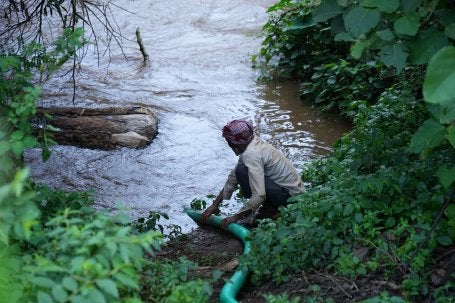
A few years ago, a local NGO came to Berbere with a promising solution. In partnership with the local government, they provided 13 farmer groups in Berbere with petrol-powered irrigation pumps. Alongside the equipment, participants received training in fruit and vegetable production as well as startup seeds for the first-round harvest — giving them the means to grow beyond the rainy season for the first time. Many went from merely scraping by to having surplus crops to sell.
But the fix was short lived. Petrol was expensive, costing farmers anywhere from US$91-$203 per year to irrigate a single hectare. Fuel was not always available in Berbere and was costly to transport from nearby towns. Frequent repairs and maintenance posed further troubles. Ultimately, the petrol pumps were simply too expensive, and many farmers reverted to subsistence farming.
But today, things are beginning to look up.
Connecting Clean Energy, Water and Livelihoods
In 2024, WRI and DanChurchAid (DCA) conducted an extensive feasibility study in Berbere. The goal was to identify solutions that could boost agricultural productivity, farmer incomes and food security simultaneously. Solar-powered irrigation came out on top as a sustainable, affordable alternative to petrol pumps. With funding from the IKEA Foundation, WRI and DCA launched a pilot project in two kebeles (villages) in Berbere.
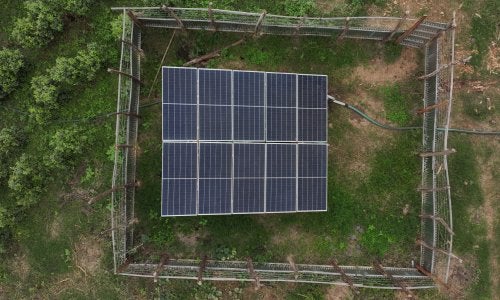
An initial investment of US$19,200 funded the installation of two solar-powered pumps in Gebe Keku and Gora Hido. With a capacity of 2.75 kilowatts (kW) each, these systems can irrigate a total of 14 hectares of land, supporting 48 farming households. Farmers also received training on how to use and maintain the solar pumps.
The shift has been transformative.
In the past, Berbere’s farmers produced staple crops — mainly maize (corn) and teff (a grain native to Ethiopia). Most of the harvest was needed simply to feed their families. When crops were sold, the quantities were small and brought limited income. Based on our interviews with farmers, the average household earned only about US$207 per year from crop sales.
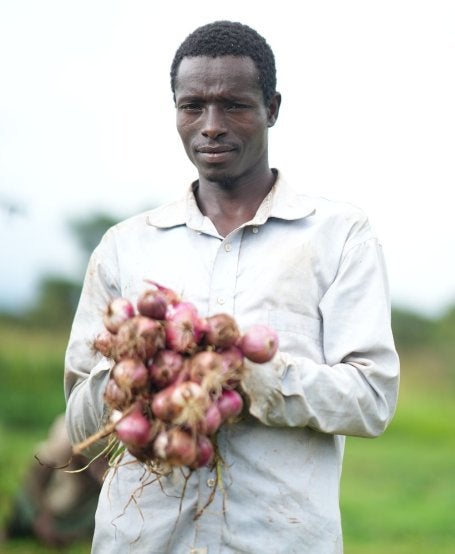
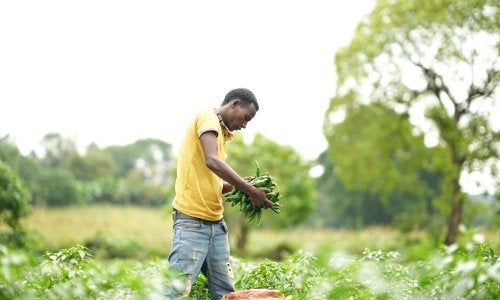
Now, farmers served by the solar pumps can access water year-round, allowing them to harvest three to four times a year rather than just one. Harvests are no longer dependent on erratic rainfall, and farmers are more resilient to droughts. They’re also producing higher value crops that earn more at the market, such as onion, tomato, chili and cabbage, alongside staple crops for home consumption.
During the first production season after the solar pumps were installed (April-June 2025), farmers in the two kebeles collectively produced over 5,100 kg of onions, 8,000 kg of peppers and 3,300 kg of cabbage. Sales of these crops generated substantial income, with farmers reporting that they earned, on average, US$709 from onions, $274 from peppers, and $77 from cabbage in a single production season. This is 4 to 10 times more than many made in a year from teff and maize.
“From chili alone, I earned 27,000 birr (US$180) in the first production cycle using the solar pump,” said Adem Reshid, a young farmer in Gora Hido. Omar Ali, another farmer in the kebele, said, “I’m producing chili in less than a hectare of land, but in the first harvest, I made 30,000 birr (US$200).”
Although solar pumps have a higher upfront cost (US$19,200) compared to petrol pumps (US$2,700), they have a longer lifespan of 20 years versus 10. They also have far lower maintenance costs (less than US$10 per year versus over $1,300 for petrol pumps) and no fuel expenses. As a result, petrol pumps have a lifecycle cost roughly 3 times higher than solar pumps. With a six- to eight-year payback period, solar pumps offer a more economical and sustainable long-term solution.

From Survival to Prosperity
For farmers like Adem, Ali and their families, this additional income means that, perhaps for the first time, they can think beyond survival. It allows them to buy everyday essentials like cooking oil, flour and soap and to invest in assets such as livestock. Adem bought three goats with the money he earned from his first chili sales and plans to invest more in livestock in the future. He hopes this will diversify his income.
Several farmers that we interviewed reinvested their income into purchasing seeds and expanding high-value crop production. Some plan to channel funds toward improving their homes or building new ones. Others say the additional income will support their children’s education — in particular, purchasing school supplies and uniforms — or allow them to pursue small businesses.
These investments show that the project’s benefits extend far beyond immediate income gains, contributing to long-term livelihood resilience, economic empowerment and community development.
Big Plans for the Future
Although this pilot was launched in only two kebeles in Berbere, it has strong potential to be replicated across the region.
The area has abundant sunshine and perennial rivers with plenty of water, making solar irrigation technically viable and reliable for long-term use. For farmers, this would mean multiple crop cycles each year, increased productivity and reduced risk of crop failure.
Demand for solar power is high, especially after locals witnessed the pilot’s success in Gebe Keku and Gora Hido. Nearly 78% of farmers we interviewed in neighboring kebeles are interested in adopting solar power. These systems also offer long-term cost savings with an estimated payback period of just over eight years, making them an attractive investment. While most farmers can’t afford the upfront costs out of pocket, innovative financing mechanisms, including access to credit facilities, could help cover the initial outlay.
While the pilot phase currently covers 14 hectares and serves 48 households, expansion scenarios modeled by WRI show that, with more funding, it is possible to irrigate up to 30–142 hectares per kebele. This could directly support between 50 and 260 farmers per site and indirectly benefit up to 1,500 people when farmers’ households and extended families are included.
What Will It Take to Expand the Program?
Energy is a critical enabler, but access alone is not enough to transform farmers’ livelihoods without support from other stakeholders. For renewable energy technologies to deliver meaningful and lasting impact, coordinated action is needed across the entire ecosystem — including government institutions, development partners, the private sector and local communities.
Last year, WRI convened government, donors, private sector actors, financial institutions and implementing partners to demonstrate the project’s scalability. Participants agreed that growing its success would require a hybrid approach of cooperative aggregation, innovative financing and local capacity development. This led to the creation of a cooperative business model that allows farmers to access financing through direct engagement with financial institutions, negotiate better terms with suppliers and receive after-sale service. The financing includes local bank loans, de-risked pay-as-you-go models and donor-supported subsidies to make solar adoption affordable.
The gathering was also an opportunity to showcase this project’s contribution to Ethiopia’s overall development agenda. By improving access to reliable irrigation technology and promoting sustainable water and energy use, the effort supports national priorities on irrigation expansion and climate-smart agriculture. It also contributes to long-term development goals by boosting agricultural productivity, strengthening food security and building resilience to climate change — making a strong case for government investment in such initiatives.
In parallel, WRI and DCA are working closely with the Berbere Woreda Bureau of Agriculture to strengthen local ownership and ensure long-term sustainability. Recently, a memorandum of understanding was signed between the Bureau of Agriculture, DCA and farmer communities, formalizing their collaboration to support lasting community impact.
With this support, Berbere’s farmers have big plans for the future. They want to boost irrigation capacity, expand production, and ultimately change their lives and their children’s lives for the better. The seeds of change are already planted.