

Featured WRI Experts:

Image by
SDI Kenya
For Women in Nairobi’s Informal Settlements, Floods Don’t End When the Water Recedes
The 2024 floods in Nairobi, Kenya cost women homes, livelihoods and access to essential care. Their experiences show why safer housing is needed before the next disaster hits.
When floodwater entered Virginia’s single-family home in Mathare, an informal settlement in Nairobi, it washed away much more than her furniture — upending all her sources of security while reshaping her life.
Before the floods, she owned 15 rental rooms, operated a retail shop and sold water. As the head of a household with nine children, these businesses were crucial to meeting their daily needs. But the floodwaters destroyed everything, forcing Virginia and her family to spend several months in a rescue center before a friend helped find the family a single room to rent.
The women featured in this article were interviewed as part of WRI’s research on flooding in Nairobi’s informal settlements. Their names have been changed to protect their privacy.
The WRI Issue Brief Flooding in Nairobi’s Informal Settlements: Advancing Equitable and Resilient Solutions examines how these floods exposed existing inequalities in housing, infrastructure and access to essential services.
The disaster continued to influence her life long after the waters receded: While traveling to collect food assistance for her children, Virginia fractured her hip in a motorcycle accident. She now uses crutches and cannot afford the surgery she requires. She also said she was diagnosed with several other health conditions, which she now struggles to manage without a stable income or adequate access to healthcare.
Virginia’s experience captures a truth often lost when flooding and other natural disasters are reduced to statistics. These disasters aren’t just about water, wind or other kinds of destruction — they’re about people whose livelihoods, access to secure food, clean water and emergency relief can be swept away overnight.
Research demonstrates that natural disasters are not experienced in gender-neutral ways. For women, existing inequalities in access to information, finance, safe shelter, mobility, decision-making and social protection can compound existing challenges — like those experienced by living in informal settlements — and shape who can prepare, evacuate, recover and whose voices can be heard in the process.
Nairobi’s Devastating Floods
These gender differences and challenges are especially true in Nairobi, where severe floods decimated the city and continue to pose an ongoing threat.
In June 2024, the Kenya Red Cross reported that flooding led to 294 fatalities, 162 missing persons and 101,132 affected households nationwide. The floods also disrupted 151 schools and 45 health facilities and destroyed over 65,000 acres of farmland. The recurrence of severe flooding in March and April of this year further underscores the ongoing vulnerability of communities living in high-risk areas.
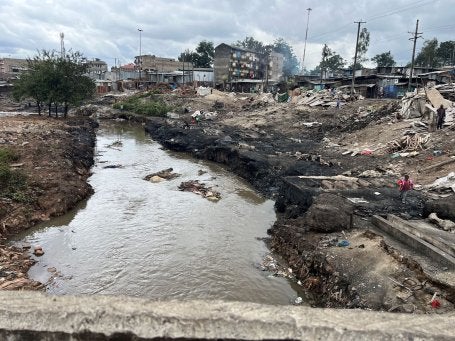
Mary, a Mathare resident we interviewed as part of our research on flooding in Nairobi’s informal settlements, described how she built a relatively stable life through rental housing and water vending. Before the flood, she owned 45 rental rooms, which provided for her three children. But during the 2024 floods, she said that 25 rooms constructed from corrugated iron sheets were swept away.
After the floods, the remaining 20 rooms were vandalized and later demolished when the Kenyan government issued a 48-hour evacuation directive for anyone living within a 30-meter riparian corridor of urban rivers.
Adding to this hardship, Mary reported that she did not receive the 10,000 Kenyan shillings (equivalent to $77 using 2024 exchange rates) offered to households affected by the demolitions. Without a home, she relied on a friend to care for her children for two months, including her youngest, who was then two months old. The loss also carried a social cost. Mary described being mocked rather than supported by some neighbors because her ethnic community was a minority in the village where she had invested. At the time of the interview, she had not re-established her businesses and remained dependent on relief.
Informal Housing Compounds Challenges for Women
Flooding in Nairobi exposes a fundamental housing challenge, especially for women.
In sub-Saharan African cities, a majority of women-headed households live in informal settlements that lack durable construction materials, drainage, sanitation and reliable water services, which leave homes highly vulnerable to climate hazards.
In Nairobi, the informal settlements are densely populated and much of the city's future population growth is expected to be absorbed in these neighborhoods. Because of a longstanding shortage of affordable housing, many low-income households have little choice but to settle in in floodplains, near rivers and waterways, and other environmentally fragile areas where exposure to flood risk is significantly higher.
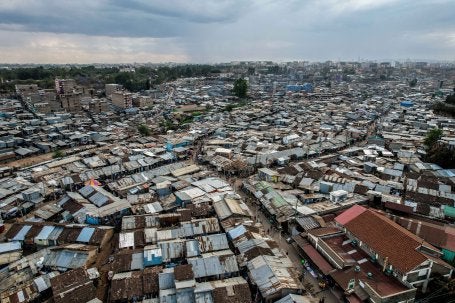
The city faces an estimated annual housing shortfall of 250,000 units, while the vast majority of formally constructed housing serves middle- and higher-income households, leaving few safe and affordable options for lower-income families.
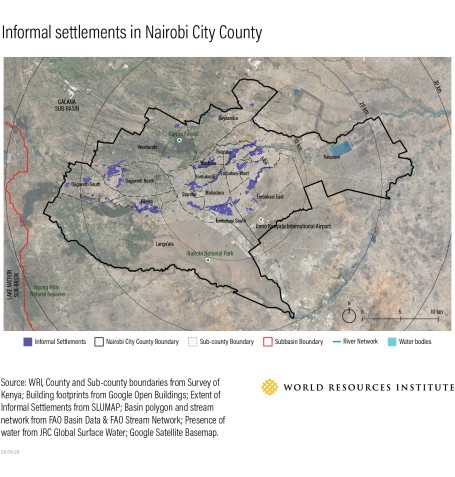
Women living in Nairobi’s informal settlements carry structural disadvantages that can deeply impact their outcomes.
Nationally, women devote nearly five times more hours than men to unpaid domestic and care work each day, leaving them with less income. In informal settlements, women also often run small neighborhood-based businesses that must operate daily to generate income. During the floods, many of those businesses were unable to open.
Financial exclusion also runs deep. Kenya’s financial-health gender gap widened to 7.5% in 2024, and only 46.5% of women use banking products, compared with 58.9% of men. Further, women remain far more likely than men to rely on informal savings groups rather than formal credit, insurance or collateral-backed loans, leaving few reserves to draw on in a crisis.
One Nairobi woman we interviewed shared that she kept all her savings in her house. When it flooded, she had no time to save any of her property, and her savings were washed away, turning the loss of a home into an immediate loss of financial resources and independence.
Women are also less likely to own their homes, leaving them out of the decision-making process on where the homes can be located or how they’re constructed.
How Women Experience Disaster Differently
The experiences of the women we interviewed demonstrate that floods do not affect all people in the same way.
When the floods arrived, for some women, gendered roles became emergency duties. Women absorbed caregiving roles that included moving children, older relatives and persons with disabilities, saving food, documents and business stock. At the same time, they carried increased responsibilities of managing water and sanitation, shelter, healthcare and safety constraints while damaged transport infrastructure limited their mobility to markets, hospitals and schools.
Pregnant and nursing women struggled to access healthcare, while those with infants were disadvantaged at crowded relief points because several health facilities were swept away by water, and the ones that remained were too far away. The relief points were not segregated, which also posed a health and safety risk for both women and children.
Janet’s circumstances highlight how pregnancy and limited access to essential services increased her vulnerability during the floods. Although she survived the flooding, she was unable to access essential prenatal care and the rest of her pregnancy became difficult. Living in a camp exposed her to disease, inadequate sanitation and limited access to healthcare.
Adolescent girls faced interrupted schooling, unsafe sanitation and menstrual health challenges, while displaced women and girls faced heightened exposure to harassment, exploitation and gender-based violence. A study found that young women’s food access, sanitation and menstrual insecurity, depression and transactional-sex risks were worse during Kenya’s 2024 rains than six months later, especially among those needing food, income or water assistance.
Akinyi, a 75-year-old mother of three and grandmother of three, described how the floods transformed a previously stable life. Before the disaster, she lived in her own two-bedroom home and earned an income selling vegetables to support her children and grandchildren. As the matriarch of her family, she was able to provide food, support her children’s education and care for younger family members. The floods, however, disrupted the stability she had built over many years.
After the floods, she lost her voice after being forced to sleep in the rain. Going to the rescue camps was not an option for her as culturally she cannot share the same room with young men. She explained how one of her children developed mental health challenges while her teenage granddaughter, feeling like there was no other option to get out of their circumstances, opted to get married, resulting in a pregnancy.
Currently Akinyi lives with her daughter and three grandchildren in a rented home that continues to leak water and sewage into the house. Given her age, Akinyi said it has been difficult to find a job and now relies on her children for survival.
Relief Systems Can Perpetuate Unequal Power
Displacement can often compound the danger for women because overcrowded shelters offer little privacy. In several flood-affected settlements, men entrusted with distributing relief demanded sex in exchange for food. The Kenya National Gender and Equality Commission found that disaster response and resource allocation did not adequately factor in the needs of marginalized groups such as women, persons with disabilities and the elderly. As a result, menstrual hygiene needs, mobility support and protection services were chronically underprovided during the 2024 floods. In Mathare, a local survivor survey found that one in five women had experienced or witnessed gender-based violence during the flooding, and more than half knew of cases nearby.
During our interviews, we heard stories from women who experienced sexual harassment and assault while in the shelters. These stories were echoed by a trained community health advocate from Mathare. According to her, these challenges were exacerbated by overcrowding and the absence of private, sex-separated sleeping areas. Shelter managers eventually separated spaces for women and men, although the facilities remained severely constrained.
She also mentioned that sexual exploitation was not just experienced in shelters, but there were cases linked to food relief distribution as well. These accounts expose a critical weakness in emergency response: When scarce resources are controlled by a small number of male gatekeepers, without women’s leadership, relief can become another site of coercion. “Sex for food” is not simply an individual act of abuse; it reflects unequal power over the resources on which survival depends. Evidence shows that unequal control over food and aid can create risks of transactional sex and sexual exploitation.
After the Flood: Unequal Resources Produced Unequal Recovery
After the water receded, recovery was slower and more unsteady among women, often divided along lines of assets, time and social power. Women whose homes also served as shops, food stalls or rental properties lost both shelter and income. At the same time unpaid care, illness and disrupted services reduced time for rebuilding, a compounded loss that men in wage employment did not face.
For many women in informal settlements, recovery was not simply about repairing damaged homes. It meant rebuilding livelihoods, restoring access to essential services and managing increased caregiving responsibilities while dealing with displacement and uncertainty. According to WRI research, persistent trauma, livelihood loss and displacement worsened where riparian demolitions proceeded without safe alternatives. Research shows that women recover through family support, savings groups, collective repairs, temporary shelter and counselling, but these resources are uneven and easily exhausted.
The women we interviewed described continuing psychological distress long after the floodwaters receded. Even with government-provided services and assistance, women feared that sensitive information might not remain private. Research among women in Nairobi’s informal settlements similarly links extreme-weather exposure and resource insecurity with poorer mental health outcomes.
Prevention That Saves Lives
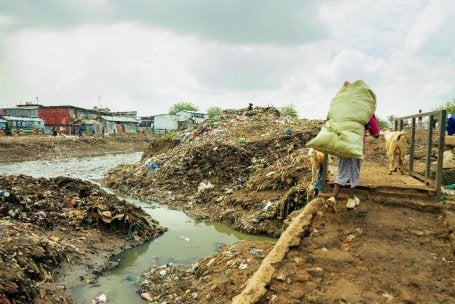
Where housing is built and who it is built for can determine safety, access and future opportunity. Housing cannot be separated from other systems, such as water and sanitation infrastructure, healthcare access and transportation networks. When these systems fail, women are particularly affected.
Investing in resilient housing is therefore not only essential for reducing risks from natural disasters, but also for reducing gender inequalities by improving safety, protecting livelihoods and enabling women and their families to recover more quickly from climate shocks.
As climate change drives more frequent and intense storms and flooding, cities must move toward proactive, gender-responsive resilience planning. Addressing risks from natural disasters requires action before, during and after to prevent future loss of property and lives.
Before disasters occur, governments should prioritize investments that expand access to safe, affordable, climate-resilient housing outside flood-prone areas, strengthening drainage and water infrastructure in underserved neighborhoods, restoring wetlands and riparian corridors and integrating nature-based solutions into urban planning.
Women and community organizations should be meaningfully involved in land-use planning, disaster preparedness and early warning systems, ensuring that local knowledge informs decisions and that alerts reach those most at risk. Building resilience before a disaster strikes also means investing in systems that help vulnerable households act before a disaster rather than relying solely on emergency assistance afterward.
When flooding occurs, response efforts must recognize that disasters affect people differently and ensure that assistance is designed around the needs of diverse groups, including women, older people and people with disabilities.
Evacuation centers should meet gender-responsive standards by providing safe, well-lit spaces, separate sanitation facilities, privacy and protection from gender-based violence. Relief efforts should move beyond centralized distribution models that often exclude women caring for children, pregnant women, older adults, and people with disabilities. Instead, governments and humanitarian organizations should work with trusted community networks to deliver assistance directly to vulnerable households while ensuring continued access to maternal healthcare, water, sanitation, hygiene supplies, and other essential services throughout the crisis. Disaster response should not simply focus on keeping people alive but on protecting their dignity, safety and wellbeing.
Recovery efforts should use flooding as an opportunity to reduce, rather than recreate, future vulnerability. Rebuilding should prioritize safe, affordable housing before relocating communities from high-risk areas, ensuring that households are not displaced without viable alternatives. Investments should restore community-managed water and sanitation facilities, strengthen climate-resilient infrastructure, and adopt a "build back better" approach that prepares neighborhoods for increasingly severe climate impacts.
At the same time, recovery policies should recognize and address the disproportionate burdens women shoulder after disasters by supporting the restoration of livelihoods, reducing unpaid care burdens through reliable public services, and embedding gender equity into long-term resilience planning. Women need to be at the forefront in early warning designs, relief distribution and local disaster committees so that recovery reflects lived needs rather than reproducing pre-flood inequalities while reducing exposure to exploitation and stigma.
As climate risks increase and flooding becomes increasingly common, resilience will depend not only on responding more effectively to disasters, but on creating cities that are safer, more inclusive, and better equipped to protect those most vulnerable to climate risks.

