

Featured WRI Experts:
COP31: Delivering on Africa's Climate Priorities
En savoir plus :
COP31

Crédit photo
Serra Galos/ WRI
Key Takeaways
-
Investing in climate action is also investing in Africa’s energy security, food security and economic resilience. Finance is what can help turn these connected priorities into practical results.
In a world shaken by geopolitical conflict and climate shocks, African countries face increasing pressure on their food and energy systems. These challenges are linked. Higher fuel and input prices directly inflate the cost of producing and distributing food, transport and household expenditure, while droughts, floods and extreme heat erode agricultural output undermining food security and economic resilience. Significant investments are required to strengthen these systems and prepare for future shocks.
COP31’s emerging agenda offers opportunities to turn these interconnected challenges into practical action. The Turkish Presidency has identified priorities including electrification, zero waste and methane reduction, resilient cities, green industrialization and food security — with finance, technology and capacity-building underpinning delivery. Meanwhile the African Group of Negotiators has emphasized adaptation finance, agriculture and food security, gender and oceans. For Africa, the question is whether these initiatives can translate into more accessible climate finance, stronger resilience, expanded energy access and investments that protect livelihoods while supporting economic transformation.
Here are four areas where COP31 must help bridge the gap between climate ambition and implementation for the African continent.
1. Clean Energy: Strengthening Energy Security and Economic Opportunity
The 2026 global fuel crisis exposed the vulnerability of economies to disruptions in global energy supplies. Conflict in the Middle East and disruptions around the Strait of Hormuz — a critical route for international oil and gas shipments — have driven up energy prices and shipping costs, with knock-on effects on transport, food production and household budgets.
For African countries that depend heavily on imported petroleum products and fertilizers, these shocks have consequences far beyond the energy sector. Higher fuel prices increase the cost of running farm machinery, pumping irrigation water and transporting food from farms to markets. Rising fertilizer costs has also forced farmers to cut essential inputs or plant less, further pressuring food production and affordability.
These challenges show why Africa needs to invest in clean, affordable and reliable energy to reduce its exposure to volatile fuel markets. Expanding access to reliable electricity can help businesses grow, improve farming and transport, create jobs and support economic growth.
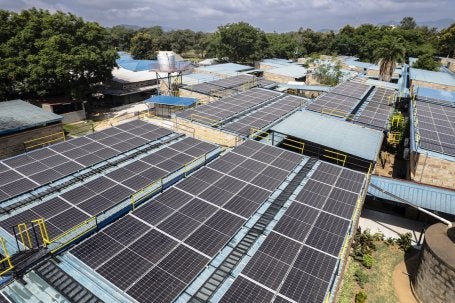
Solar panels at Makueni County Hospital, Kenya. Photo by Third Factor Productions/WRI
Sub-Saharan Africa receives only 2% of clean energy finance yet has the largest access gap globally with over 600 million still lacking basic access. Mission 300, led by the World Bank Group and the African Development Bank, aims to connect 300 million people in Africa to electricity by 2030. Delivering this ambition will require targeted investment and better planning to ensure electricity reaches the communities and businesses that need it most. WRI’s Energy Access Explorer can support this effort by helping decision makers identify areas with limited energy access and inform planning for energy investments that respond to local needs.
At COP31, African countries should urge the Presidency to translate its electrification ambition into practical delivery plans that reflect the needs of African economies. This means expanding access while investing in reliable grids, clean power and energy efficiency and enabling productive uses of electricity — from irrigation to cold storage and food processing. Mission 300 offers a platform to accelerate connections, but success will depend on affordable finance and reaching underserved communities and businesses. Ultimately, progress must be measured not just by connections made, but by reliable and affordable electricity that creates jobs, strengthens livelihoods and builds economic resilience.
2. Adaptation: Investing in Africa’s Resilience Before Shocks Hit
Adaptation is not simply the cost of responding to climate change, it is an investment in protecting economies, livelihoods and development gains. Across Africa, droughts, floods and extreme heat threaten food production, water supply, infrastructure and urban economies.
Climate shocks hit vulnerable communities the hardest. A study by WRI Africa found that the 2024 floods displaced 20,968 families, highlighting how heavy rainfall, poor drainage, settlement in flood-prone areas, degraded natural buffers and fragmented governance compound flood risks in Nairobi’s informal settlements. Solutions include better urban planning, green and grey infrastructure, early warning systems and community-centered approaches. As COP31 focuses on implementation, these realities underscore the need to scale up adaptation finance, improve access for vulnerable countries and strengthen measures to track adaptation progress, ensuring that global commitments translate into tangible resilience for communities on the frontlines of climate change.

Residents of Mathare, Nairobi, Kenya, restore flood-damaged riverbanks through greening and community-led restoration. Photo by Schuyler Null/WRI
Investing in resilient agriculture, water management, early warning systems and climate-resilient infrastructure can reduce future losses and create economic opportunities. WRI analysis estimates that every $1 invested in adaptation could generate an average of $10 in benefits over 10 years.
Yet financing these investments remains a major challenge. Developing countries could face adaptation financing needs of up to $365 billion annually by 2035, needs that will remain difficult to meet even with the COP30 commitment to triple adaptation finance.
At COP31, African countries are calling for a clear pathway to deliver this commitment. The African Group of Negotiators is urging UNFCCC to establish a dedicated negotiating agenda item to address how this commitment will be implemented, alongside an assessment of developing countries’ adaptation funding needs to inform Green Climate Fund resource mobilization. The aim is to move beyond political commitments towards predictable finance that meets countries’ growing climate resilience needs. These efforts should complement ongoing work on the Global Goal on Adaptation and existing adaptation frameworks, ensuring finance translates into practical action to protect vulnerable communities and strengthen resilience across Africa. For Africa, success means embedding resilience in economies before the next shock happens.
3. Food Loss and Waste: A Practical Solution With Multiple Benefits for People, Nature and Climate
Food loss and waste receives far less attention than it deserves, despite offering a practical way to advance food security, reduce greenhouse gas emission and protect nature. Globally, around one-third of food produced is lost or wasted. This translates into waste of the land, water, energy and other resources used to produce it, while discarded food generates methane as it decomposes. Combined, food loss and waste account for up to 10% of global greenhouse gas emissions.
The opportunity is particularly important for Africa, where food loss reduces farmers’ incomes and undermines food security. WRI Africa's research on food loss and food waste in Kenya estimates that up to 40$ of food produced in the country is lost or wasted each year, representing approximately Kshs 72 billion ($578 million) in economic value. Better storage, transport, handling and market access can help keep more food in the supply chain, improve livelihoods and make food more available and affordable.
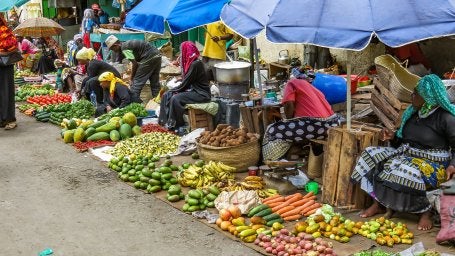
A food market in Kenya. Photo by WRI
Reducing food loss and improving farmers’ access is essential to building more resilient food systems. A study by WRI Africa highlights how the African Continental Free Trade Area could create opportunities for smallholder farmers. However, limited access to finance, affordable inputs and markets are barriers to improving productivity, adapting to climate change and improving food security and livelihoods.
Food loss and waste is also a priority for the COP31 Presidency, which has set a goal of halving projected grown in global waste by 2035 and placed zero waste and methane reduction among its key climate action themes. For Africa, this creates an opportunity to connect global climate action with immediate development priorities: making more food available, protecting farmers’ incomes and reducing the resources wasted along supply chains.
At COP31, governments and partners should use the Presidency’s Zero Waste and Food Security Action Agenda to secure measure commitments to reduce food loss and waste. This includes setting national targets, investing in storage and cold chains, improving transport and handling and integrating food loss and waste reduction into climate plans. A key outcome should be a coalition of governments, businesses and development partners with clear reduction targets, investment commitments and accountability mechanisms to track progress — strengthening food security, protecting livelihoods and reducing emissions.
Progress should be judged by measurable reductions in food lost or wasted, the economic value retained by producers and businesses and the resulting benefits for food security and emissions reduction.
4. Financing Delivery: Turning Climate Priorities into Investable Solutions
Ambition alone will not deliver Africa’s climate goals. Countries need accessible finance, stronger pipelines of investment-ready projects and mechanisms that align investment with national priorities. Closing the funding gap requires mobilizing both public and private capital. While private investment is essential for scaling clean energy and resilient infrastructure, public and concessional finance remain critical to lowering borrowing costs, reducing risks and supporting projects that deliver social and environmental benefits but may not generate immediate commercial returns.
Country Platforms can help bridge this gap by bringing governments, development partners and investors together around country-led priorities. WRI is supporting these approaches in Ethiopia and Rwanda to connect climate goals with the finance needed to deliver them. Innovative mechanisms can also support outcomes that markets may overlook. The Tropical Forests Forever Facility (TFFF), for example, is designed to provide long-term financial support to countries that conserve tropical forests — helping make forest protection more financially viable despite its long-term returns, while advancing climate action and nature conservation.
At COP31, African countries should press for climate-finance commitments to translate into more accessible funding and stronger investment pipelines aligned with national development priorities. This requires more than mobilizing capital. Countries need support to prepare credible projects, coordinate public and private investment, and use grants and concessional finance to address risks that commercial investors cannot absorb alone. Country Platforms can help connect national priorities with development partners and investors, but their effectiveness will depend on country ownership, clear institutional responsibilities and a reliable flow of finance. Success should be measured by the projects financed and implemented and by the resilience and development benefits they deliver.
From COP31 Commitments to Action
For Africa, COP31’s success should be measured not by the number of announcements made, but by whether they lead to tangible improvements in energy access, climate resilience, food security and investment. This means more affordable finance reaching the countries and communities that need it, practical solutions reducing food loss and climate risks and stronger systems for translating national priorities into funded projects.
As the world looks towards COP32 in Ethiopia in 2027, the priority must be to sustain momentum and track implementation. COP31 outcomes should help establish a clearer path from global commitments to investments that protect livelihoods; strengthen climate resilience; drive green growth and support inclusive, sustainable development across the continent.